Best Time to Water Your Lawn
When determining the best time to water your lawn, the early morning hours, before 10 am, stand out as optimal for learning the Best Time to Water Your Lawn.
This timing allows the water to penetrate deeply into the soil, maximizing absorption before the day’s heat increases evaporation.
However, while this might seem straightforward, various factors can influence this decision, from the type of grass you’re cultivating to the specific climate conditions of your area.
You might be wondering if there are exceptions to this rule, especially in different seasons or during unusual weather patterns.
Let’s explore how these variables can affect your watering strategy.
Understanding Lawn Watering Basics
To maintain a healthy lawn, you need to grasp the fundamentals of proper watering.
First, it’s crucial to know how much water your lawn requires.
Typically, lawns need about one inch of water per week from rainfall or manual watering.
This amount helps to reach deep into the soil, encouraging robust root systems.
You must also consider the type of soil you have.
Clay soils retain moisture longer than sandy soils, which means watering frequency can vary.
If you’re unsure, check the soil moisture by sticking a screwdriver into the ground.
If it goes in easily, the soil is likely moist enough; if it’s tough, it’s time to water.
Timing your watering is also key, though specific details will depend on your local climate and weather conditions.
Generally, it’s best to water when the sun is low or down to reduce evaporation.
Lastly, you’ll want to ensure an even distribution of water across your lawn.
Patchy watering can lead to uneven growth and weak spots.
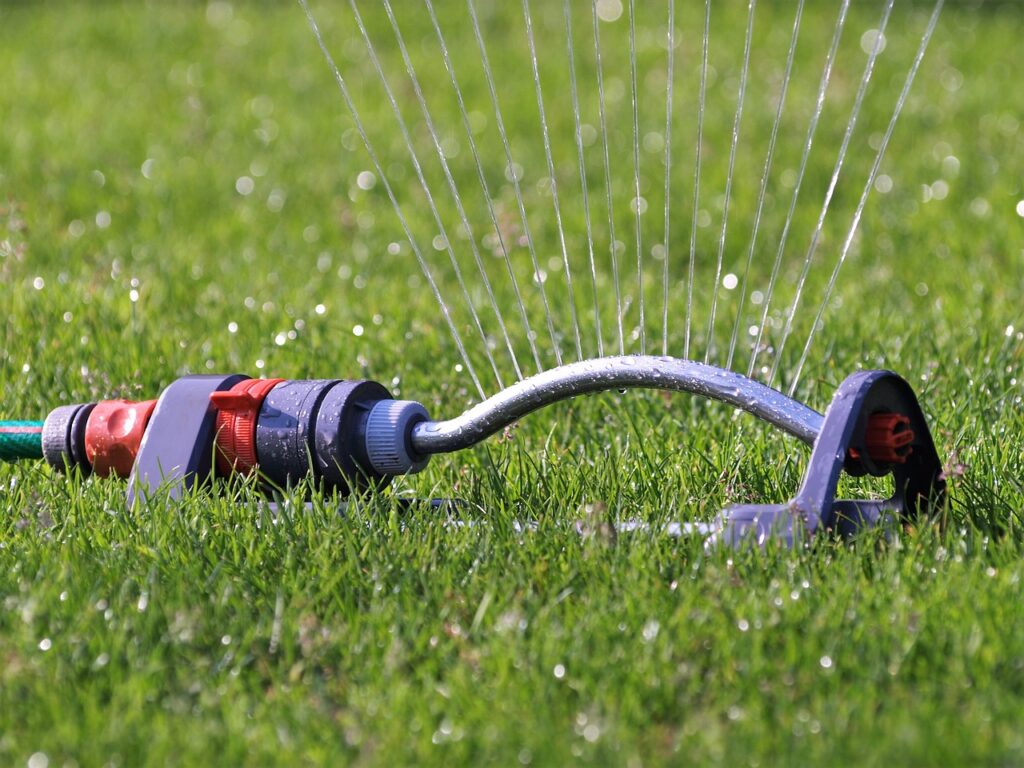
Consider using a sprinkler system that can be adjusted to cover all areas of your lawn adequately, avoiding any wasteful overlap.
Benefits of Morning Watering
Watering your lawn in the morning offers several advantages that enhance grass health and efficiency.
When you water early, typically before 10 a.m., the cooler temperatures help ensure that the water soaks deeply into the soil.
This promotes strong root growth and prepares your grass to handle the heat of the day.
Also, morning watering reduces the amount of water lost to evaporation.
The sun isn’t as strong, and the winds are usually lighter, which means more water reaches your grass instead of disappearing into the air.
You’re not just saving water; you’re making sure it counts where it matters most.
Moreover, giving your lawn a morning drink sets it up for a day of photosynthesis and growth.
The water you provide becomes part of the essential process that keeps your lawn green and lush.
You’ll notice that your grass can better withstand the stresses of sunlight and heat when it’s hydrated from the morning.
Lastly, watering in the morning keeps the grass blades dry for most of the day.
This is crucial because dry leaves are less prone to disease.
By sticking to a morning schedule, you help prevent fungal growth and other common lawn diseases, ensuring a healthier lawn with less maintenance.
Risks of Evening Watering
While morning watering can boost your lawn’s health, evening watering carries several risks that could harm it.
Watering at night doesn’t allow the sun to help evaporate excess moisture.
This lingering dampness creates the perfect environment for diseases like fungal infections, which can severely damage your grass.
You’ll notice signs like brown patches or slimy areas if disease takes hold, and by then, it’s often tough to reverse the damage.
Moreover, the cooler temperatures at night don’t promote water absorption.
Instead of seeping into the soil and reaching the roots, water can simply sit on top of your lawn.
This not only wastes water but increases the risk of runoff, where nutrients are washed away before they can benefit your grass.
Pests are another issue with evening watering.
Insects and other lawn pests are more active during cooler, moist conditions.
You might inadvertently be inviting these critters to feast on your grass, leading to further lawn health issues.
It’s clear that while it might seem convenient to water after the sun sets, you’re better off setting your sprinkler for the early morning.
This timing helps ensure that your lawn stays healthy and vibrant, avoiding the pitfalls of evening watering.
Seasonal Watering Adjustments
Adjusting your watering schedule with the seasons ensures your lawn gets the right amount of hydration without waste.
In spring, your grass is coming out of dormancy and needs more water to support new growth.
Typically, you’ll start with watering twice a week, early in the morning, to take advantage of cooler temperatures and less wind.
As you move into summer, your lawn’s water needs increase due to higher temperatures and potential drought conditions.
This might require you to water every other day, still sticking to morning hours to prevent rapid evaporation and fungal growth.
Come fall, temperatures usually drop, and your grass will start preparing for dormancy.
You can reduce watering frequency gradually as the weather cools.
This helps your lawn harden off for winter without being stressed by too much or too little water.
In winter, depending on your climate, you might need to water only once or twice a month, or not at all if your area receives sufficient rain or snow.
Efficient Watering Techniques
Now that you understand how to adjust your watering schedule with the seasons, let’s explore some techniques to water your lawn more efficiently.
First, consider the method of irrigation.
Using a soaker hose or drip irrigation can significantly reduce water wastage compared to traditional sprinklers.
These systems deliver water directly to the soil, minimizing evaporation and runoff.
Next, you’ll want to focus on the timing of your watering.
It’s best to water early in the morning when temperatures are cooler and winds are lighter.
This timing helps reduce evaporation and ensures that water soaks into the soil, reaching the roots where it’s most needed.
Another crucial factor is the amount of water you apply.
It’s better to water deeply and less frequently.
This technique encourages deeper root growth and increases drought resistance.
Aim for about one inch of water per week from rainfall or irrigation.
You can measure this using a simple rain gauge placed on your lawn.
Lastly, make sure your irrigation system is well-maintained.
Regular checks for leaks, broken heads, or misaligned sprinklers can save gallons of water.
Adjusting the settings according to the seasonal needs of your lawn will optimize water usage and promote a healthier lawn.
To keep your lawn lush and healthy, make sure you water it in the morning, ideally before 10 am.
This timing allows the water to penetrate deep into the soil, maximizing hydration without losing moisture to evaporation for the Best Time to Water Your Lawn.
Avoid evening watering to prevent fungal diseases and ensure efficient use of water.
Adjust your watering schedule with the seasons and employ efficient techniques to make the most of every drop.
Your lawn will thank you with vibrant growth and resilience.