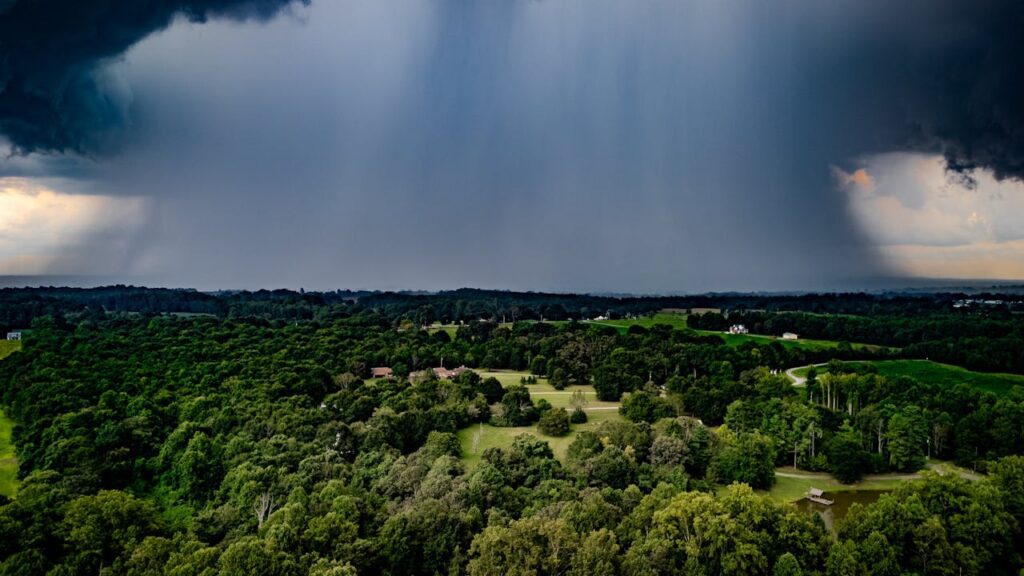
Extreme Rainfall Events
Extreme rainfall events are becoming more common, and their effects can be devastating.
You might recall historical floods that reshaped communities and economies.
As climate change alters weather patterns, these intense downpours will likely increase in frequency and severity.
How can we prepare for such events?
Understanding the science behind these rainfall patterns is essential for effective planning and resilience.
Let’s explore what this means for you and your community.
Understanding the Science Behind Extreme Rainfall
As climate change intensifies, understanding the science behind extreme rainfall becomes crucial for predicting its impacts.
You’ll find that warmer air holds more moisture, which leads to heavier downpours.
When temperatures rise, the increased evaporation from oceans contributes to this moisture, fueling storms.
Atmospheric circulation patterns can also shift, causing weather systems to stall and dump excessive rain over specific areas.
You should pay attention to phenomena like El Niño and La Niña, as they significantly influence rainfall patterns worldwide.
By grasping these scientific concepts, you can better prepare for the potential consequences of extreme rainfall events, such as flooding and infrastructure damage.
Engaging with this knowledge empowers you to advocate for effective climate policies and community preparedness initiatives.
Historical Examples of Extreme Rainfall Events
Extreme rainfall events have shaped communities and landscapes throughout history, leaving lasting impacts on both people and the environment.
Take the Great Flood of 1931 in China, for instance.
It caused devastating flooding across several provinces, displacing millions and leading to widespread famine.
In 1970, the floods in Peru after heavy rain triggered landslides, burying entire villages and claiming thousands of lives.
More recently, Hurricane Harvey in 2017 dropped unprecedented rainfall in Texas, resulting in catastrophic flooding that affected thousands of homes.
Each of these events serves as a stark reminder of nature’s power and the vulnerability of human settlements.
The Role of Climate Change in Rainfall Patterns
Climate change significantly alters rainfall patterns, leading to more intense and unpredictable weather events.
As temperatures rise, the atmosphere holds more moisture, which can intensify precipitation when storms occur.
You may notice that storms are becoming more severe, with heavier downpours that can overwhelm drainage systems.
This shift affects local ecosystems and can disrupt agricultural practices, making it harder to predict when to plant or harvest crops.
Additionally, regions that once had a reliable rainfall pattern may experience droughts followed by sudden floods, complicating water management.
It’s crucial to understand these changes, as they influence not only weather forecasts but also long-term planning for communities.
By recognizing these shifts, you can better prepare for the challenges ahead.
Impacts on Communities and Infrastructure
Communities face significant challenges as extreme rainfall events become more frequent and severe.
You might notice increased flooding, which can damage homes and disrupt daily life.
Roads and bridges may become impassable, isolating neighborhoods and hindering emergency services.
Local businesses often suffer financially, as customers can’t reach them when weather conditions worsen.
Additionally, infrastructure like water treatment plants can become overwhelmed, leading to unsafe drinking water.
You could also experience a rise in health risks, as stagnant water fosters mosquito breeding and other pests.
As these events escalate, community resilience and adaptive capacity are put to the test, impacting everything from local economies to social stability.
It’s essential to recognize these challenges and understand their far-reaching effects on your community.
Strategies for Mitigation and Adaptation
As extreme rainfall events intensify, you can implement a range of strategies to mitigate their impacts and adapt effectively.
Start by enhancing your drainage systems to reduce flooding risks.
Incorporate green infrastructure like rain gardens and permeable pavements to absorb excess water.
You should also consider updating land-use planning to avoid construction in flood-prone areas.
Educating your community about preparedness and response can foster resilience.
Invest in early warning systems to alert residents about impending storms, allowing for timely action.
Finally, engage with local governments to advocate for sustainable policies that address climate change.
As extreme rainfall events become more common, it’s vital to stay informed and proactive.
Understanding the science and recognizing the historical context can help you appreciate the risks involved.
Climate change plays a significant role, so adapting and mitigating its impacts is crucial for your community.
By implementing effective strategies, you can enhance resilience and safeguard your infrastructure.
Together, we can face these challenges and protect our homes and local economies from future flooding disasters.