The Danger of Water Hemlock
When you’re out in nature, it’s easy to overlook the dangers that lurk among the greenery with the Danger of Water Hemlock.
Water hemlock, with its smooth green stems and jagged leaves, might seem harmless, but it’s one of North America’s most toxic plants.
You might not realize that this seemingly innocuous vegetation harbors potent neurotoxins that can lead to severe health issues.
Knowing how to identify this plant could mean the difference between a pleasant hike and a medical emergency. So, what should you look for to keep yourself safe?
Identifying Water Hemlock
Identifying water hemlock can be crucial for your safety, especially if you’re spending time outdoors.
This plant often resembles some edible species, so knowing how to differentiate it’s vital for learning The Danger of Water Hemlock.
Water hemlock typically grows in wet areas, like riverbanks or marshes, and can reach heights of up to 5 feet.
Its stems are smooth, green, and may have purple splotches, which can help you spot it.
The leaves are finely divided and can look similar to parsley, but they’re generally more jagged.
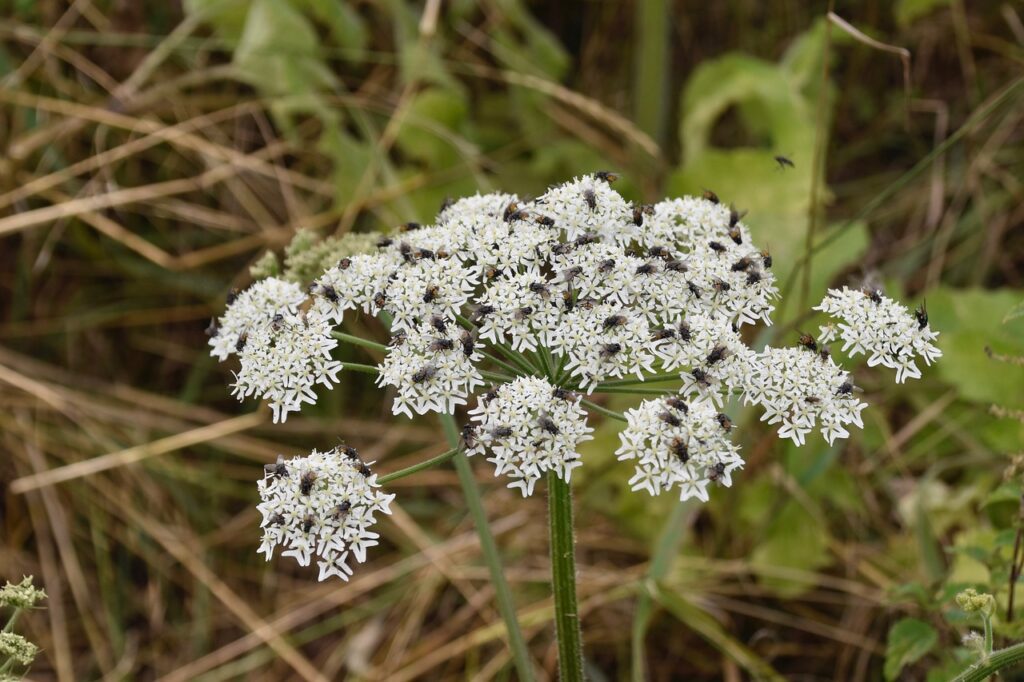
Water hemlock’s flowers are small and white, forming umbrella-shaped clusters, much like those of other plants in the carrot family.
Remember, the flowers bloom in summer, making it easier to identify during that season.
If you come across a plant that fits this description, don’t touch it.
Always keep in mind that water hemlock has a toxic reputation, and it’s better to err on the side of caution.
Educating yourself on these identifying features can prevent potential encounters with this dangerous plant, ensuring your outdoor adventures remain safe and enjoyable.
Toxic Compounds Explained
Water hemlock contains potent toxic compounds, primarily cicutoxin, which can cause severe poisoning and even death.
Cicutoxin is a neurotoxin that affects your central nervous system, leading to potentially life-threatening symptoms.
When ingested, this compound disrupts normal neurotransmission, causing excessive stimulation of neurons.
As a result, your body may react aggressively, triggering a cascade of harmful effects.
It’s crucial to understand that water hemlock isn’t just dangerous in large amounts; even small quantities can be hazardous.
The plant’s toxins can be found in various parts, including the roots, stems, and leaves.
This means that even handling the plant can pose a risk if you inadvertently touch your mouth or eyes after contact.
Additionally, cicutoxin isn’t the only concern.
Water hemlock also contains other toxic alkaloids that can compound the danger.
These compounds work synergistically, increasing the risk of severe reactions.
Therefore, it’s essential to avoid any interaction with this plant.
If you suspect you’ve come into contact with water hemlock, it’s vital to seek medical attention immediately.
Understanding these toxic compounds can help you stay safe and informed about the risks associated with this deadly plant.
Symptoms of Poisoning
When exposed to water hemlock, even a small amount of the toxin can lead to alarming symptoms of poisoning.
You might first notice gastrointestinal distress, including nausea, vomiting, and abdominal pain.
These early signs can quickly escalate, causing you to feel disoriented or anxious.
As the toxin spreads through your system, you may experience muscle twitching, tremors, and seizures.
One of the most concerning symptoms is the impact on your central nervous system.
You could find it increasingly difficult to breathe as the paralysis sets in, leading to respiratory failure if not treated promptly.
Additionally, you might experience excessive salivation, sweating, and a rapid heartbeat.
If you’re in a situation where you suspect water hemlock exposure, it’s crucial to pay attention to these symptoms.
The onset can be rapid, often within 15 minutes to a few hours after ingestion.
Remember, recognizing these symptoms early could be vital for your safety and can help inform any necessary actions or decisions regarding medical assistance.
Don’t underestimate the seriousness of this plant; its effects can be life-threatening.
First Aid Measures
If you suspect someone has been exposed to water hemlock, acting quickly is vital.
First, call emergency services immediately.
Time is of the essence, as this plant can lead to severe poisoning.
While waiting for help, ensure the person remains as calm and still as possible to slow the spread of toxins.
If the person is conscious and able to swallow, give them water to drink, but don’t force it if they’re having difficulty.
Avoid inducing vomiting, as this could worsen their condition.
If the victim shows signs of seizures, make sure their environment is safe—remove any sharp objects and cushion their head to prevent injury.
Monitor their breathing and heart rate.
If they become unresponsive or stop breathing, be prepared to perform CPR until medical professionals arrive.
If you can, gather any plant material or packaging related to the water hemlock exposure to help medical responders identify the toxin.
Prevention and Awareness
Understanding the dangers of water hemlock is crucial for anyone who enjoys spending time outdoors.
This toxic plant can be found near water sources, often mistaken for harmless vegetation.
To prevent accidental poisoning, familiarize yourself with its appearance.
Water hemlock has small white flowers, long green stems, and a distinctive lacy leaf pattern.
Knowing what to look for can save your life.
Always stay on established trails and avoid venturing into dense vegetation where water hemlock might thrive.
If you’re hiking or exploring near water bodies, keep an eye out for this plant and teach your friends to do the same.
Educating yourself and others about the risks is vital.
Share information through community workshops or social media to raise awareness.
If you have pets, ensure they don’t wander into areas where water hemlock grows, as they can be affected too.
Lastly, consider carrying a plant identification app or guide while hiking.
Being prepared can make a significant difference.
In conclusion, it’s vital to stay vigilant when exploring wet areas where water hemlock might grow.
Knowing how to identify this dangerous plant can save lives.
If you or someone you know experiences symptoms of poisoning, seek medical help immediately.
By spreading awareness and educating others, we can reduce the risks associated with this toxic plant.
Remember, safety in nature begins with knowledge—so keep an eye out and protect yourself and those around you from water hemlock.